Living-Room Landings: A Calm Guide to Short Home Practice for Young Gymnasts
Photo: young child practising gymnastics shapes on mat in UK living room, via ecdn.teacherspayteachers.com
Home practice is one of those ideas that sounds brilliant until your child attempts a handstand next to the TV and you hear the words "watch this". Gymnastics is a wonderful thing to rehearse, but the living room is not a gym. The 20-minute rule is a simple household guide: short, sensible sessions, done while everyone is still fresh, with a parent keeping an eye on the space rather than coaching from the sofa.
What the 20-minute rule actually means
It is not an official British Gymnastics rule, and it is not a target to beat. It is a cap. Twenty minutes is long enough to warm up, run through a few shapes, do some strength work and finish before tiredness turns into silliness. Two or three short sessions a week are plenty for most young gymnasts. A child who is yawning, showing off or repeatedly falling over is not benefiting from extra minutes. Stop while it is still fun.
What is genuinely worth practising at home
Home is best for the quiet foundations. Shapes such as tuck, pike, straddle, dish and arch can be practised on a clear floor. Balances, gentle strength work, calf raises, plank holds and hollow holds are useful. If the coach has given a specific drill, that is gold — follow it exactly. Routine walk-throughs can be done on a line of tape or a rug edge, with the moves marked rather than performed at full height. Gentle stretching is fine if it is part of a coach-led programme. The aim is repetition and confidence, not new tricks.
What should wait for the gym
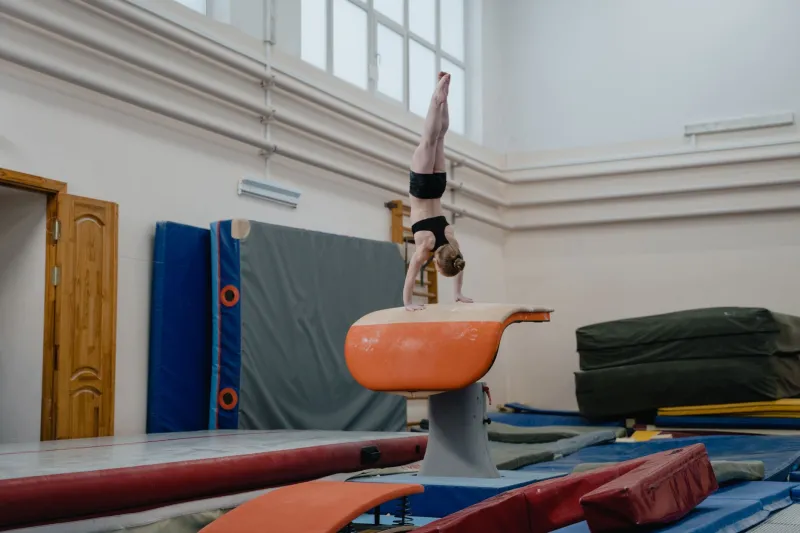
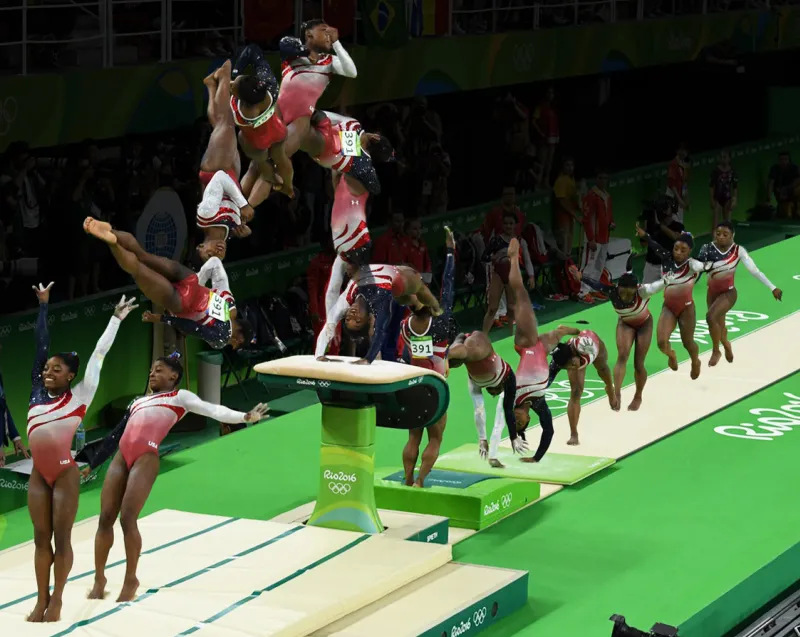
Anything that needs a spot, a sprung floor, a crash mat or a coach's eye should stay at the club. That includes new tumbling skills, backward moves, handsprings, somersaults, aerials, vault landings and anything on a raised beam. Trampoline skills belong on a trampoline, with proper supervision. YouTube is not a coach. A video can make a skill look simple, but it cannot see that your child's shoulder is dropping or that the landing surface is a laminate floor. If your child wants to try something new, write it down for the next session instead.
Setting up a safe space in a UK home
Most of us do not have a spare gym mat. Start by clearing a generous patch of floor — enough for arms out and a few steps, not just a towel-sized gap. Move the coffee table, clear hard edges and check for pets, siblings and charging cables. Bare feet are better than socks on smooth floors. Avoid practising near walls, doors or furniture that can be grabbed on the way down. Sofa cushions are not crash mats; they slide, they stack badly and they encourage exactly the sort of vaulting you are trying to avoid. In a flat, keep jumping to a minimum and think about the neighbours below. A garden can work in dry weather, but uneven grass and patio edges are not kind to ankles.
Clothing, kit and the small stuff
Fitted clothing is safer than loose hoodies or long trousers that can trip a child up. Remove jewellery, tie hair back and keep water nearby. Long socks on a wooden floor are a slip waiting to happen. If your child has grips or tape for gym, leave those for coached sessions unless the coach has said otherwise. A small mat or rug is useful, but it should not give a false sense of security. The floor underneath still matters.
When to check with the coach rather than guess
Ask the coach if your child wants to practise a skill you are not sure about, if they have pain, a recent injury or a fear that has appeared from nowhere. Ask before starting a flexibility programme at home, and ask if a home drill seems to contradict what is being taught in class. A quick email is better than a guessing game. You do not need to send a video unless the club has asked for one; some coaches prefer to see skills in person. The coach knows the child's level, the club's progressions and the safety rules. Use that knowledge.
A simple 20-minute session
Five minutes of gentle movement: marching, arm circles, shoulder rolls and a few easy squats. Five minutes of shapes: tuck, pike, straddle, dish and arch, held for a few seconds each. Five minutes of strength: plank, hollow hold, calf raises and a supported balance. Five minutes of routine walk-through or gentle stretching. Then stop. Put the furniture back. Have a drink. The session should end with your child feeling capable, not wiped out.
Signs to stop
Stop if there is pain, dizziness, a headache, a sudden fear or a lot of frustration. Stop if your child is repeatedly landing badly or if the space has stopped being clear. Stop if you are being asked to spot something you do not know how to spot. None of that is failure. It is just good parenting, and it is exactly what a coach would want you to do.
The point of home practice
Home practice should make the gym feel more familiar, not turn the front room into a competition arena. Twenty minutes, a clear floor and a sensible pair of bare feet will do more for confidence than an hour of improvised tumbling. Keep it short, keep it safe and keep the big skills for the people with the mats.