From Pencil Rolls to Pre-Rec: The Gym Club Words Every New Parent Eventually Learns
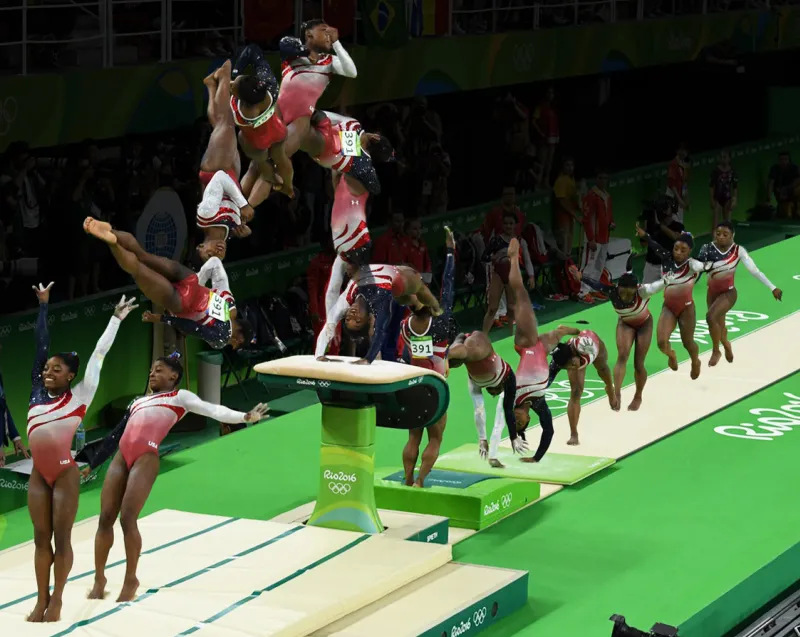
Photo: gymnastics coach explaining equipment to parents in gym club, via static01.nyt.com
Stand by the door of any gymnastics club and you will hear a language all of its own. A coach says something about a dish, a parent nods, a child disappears towards the bars, and you are left wondering whether you have wandered into a bakery or a physics lesson. The good news is that none of it is meant to exclude you. Club talk is just shorthand, and most of it becomes obvious once someone translates it.
Here is a parent-friendly glossary of the words you are most likely to hear, starting with the shapes every gymnast learns first.
Body shapes: the building blocks
- Pike: legs straight and together, body folded at the hips. Think of touching your toes, but with more control.
- Tuck: knees pulled tight to the chest. It is the shape used in a tucked jump or a tucked roll.
- Straddle: legs apart, usually with straight knees. You will see it in jumps, rolls and mounts.
- Dish: lying on your back with arms and legs lifted, body curved like a shallow bowl. It builds core strength and is harder than it looks.
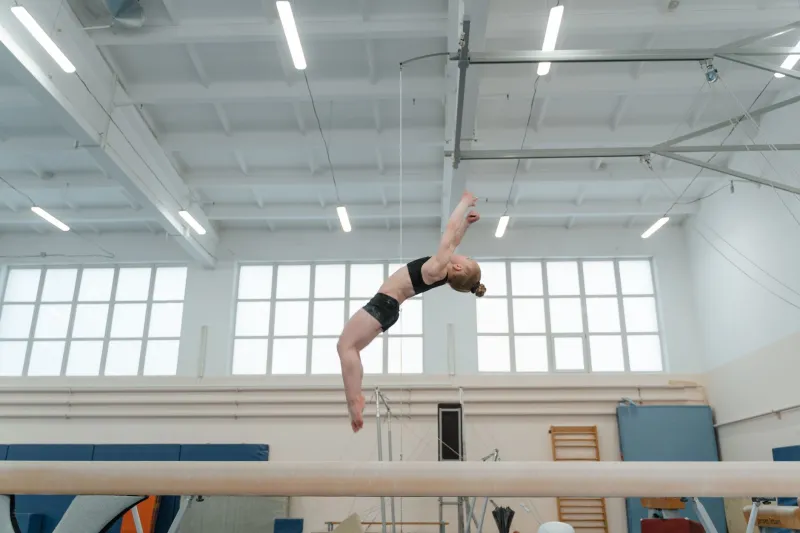
- Arch: the opposite of dish, with the body curving backwards. Coaches use it to teach balance and shoulder position.
- Pencil: body long and straight, arms by the ears. A pencil roll is exactly what it sounds like: a log roll with no bendy bits.
Why does this matter? Because gymnastics is built on shapes. A coach who says “show me a tight tuck” is asking for body control, not just a cute pose. When children learn the shapes early, skills like rolls and vaults become much easier later.
Rolls and moves
- Pencil roll: a straight-body roll along the floor. It teaches tension and spatial awareness before children attempt a forward roll.
- Forward roll: the classic roll over the shoulders. Coaches often call it a dish-to-tuck roll because the body starts long and finishes tucked.
- Backward roll: rolling backwards over the shoulders. It needs more strength and confidence, so it usually comes later.
- Cartwheel: a sideways hand-to-hand rotation. It is often the first real “wow” skill children show grandparents.
- Handstand: balancing upside down on the hands. Coaches break it down with shapes, wall drills and lots of spotting.
- Bridge: a backbend from the floor with hands and feet down. It is used for flexibility and shoulder strength, not as a party trick.
A good coach will not rush these. A pencil roll that looks simple is doing important work: it teaches a child to keep their body tight and move with control. That control is what makes the bigger skills safer.
The apparatus
- Floor: the sprung floor area used for rolls, handstands, tumbling and lots of conditioning games.
- Vault: the padded box or table children run towards and jump over. In recreational classes it might be a small box or a stack of mats.
- Bars: the uneven bars for girls and high bar or parallel bars for boys. Recreational classes often use low bars and assistance.
- Beam: the balance beam. It might be a low beam, a floor beam or a line on the mat for beginners.
- Trampette: a small springy board used to help children get height into a vault or mat. It is not the same as a full trampoline.
- Springboard: the springy board used for vaulting and some bar work.
- Mushroom: a small domed piece of equipment used to teach circle skills on pommel horse. It looks odd and is genuinely useful.
- Air track: an inflatable tumble track used for rolls, jumps and tumbling. Children love it; coaches love it because it is forgiving.
Class names and pathways
- Rec: short for recreational gymnastics. These are the general classes where children learn skills, build confidence and work through badges without the pressure of competition.
- Pre-rec: a bridge between toddler or preschool classes and recreational gymnastics. It usually focuses on listening, shapes and basic movement patterns.
- Development squad: a group for children who show aptitude and want more training. It is often by invitation and may lead to competitive pathways.
- Squad: a training group with a more structured schedule, often including competitions. Not every child needs to get here, and not every child wants to.
- Trial: a session where a coach assesses whether a child is ready for a particular group. It is not a pass-or-fail exam, even if it feels like one.
- Badges: awards children work towards in class. They are a nice way to mark progress, but they are not the whole point of gymnastics.
If your child is invited to a squad or trial, ask what the commitment looks like. Training hours, competition dates and costs matter. A good club will be happy to explain the pathway without pressure.
Kit and club speak
- Leotard: the one-piece outfit worn by many gymnasts. Shorts or leggings can be worn over the top depending on the club.
- Chalk: the white powder gymnasts use on their hands for grip. It gets everywhere. That is normal.
- Grips: hand guards used on bars by some gymnasts. Beginners usually do not need them.
- Spotting: when a coach supports a gymnast during a skill. It is a safety technique, not a sign your child cannot do it.
- Shaping: the coach’s work on body position, posture and control. It is the unglamorous stuff that makes the glamorous stuff possible.
- Conditioning: strength exercises such as dish holds, squats and press-ups. Children often do not realise they are doing it because it is wrapped up in games.
How to ask without feeling silly
You are not expected to know the language on day one. Ask the coach at the end of a session, or send a short email. Most coaches would rather answer a question than have a parent quietly worrying. If the club has a parent handbook or a welcome email, read the section on class names and kit. It will save you a lot of guessing.
And try not to coach from the sidelines. Children hear enough instructions during a session. Your job is to be the calm, encouraging face at the door, not a second coach with a coat on.
Supporting at home
You do not need to turn your living room into a gym. In fact, please do not. Handstands on the sofa and forward rolls down the stairs rarely end well. A clear bit of floor and a soft mat are enough for practising shapes, if your child wants to. Praise effort rather than trophies. Ask what they enjoyed, not just what they learned. And if they come home talking about a dish, a pike or a pre-rec, you can now nod with confidence.
Gymnastics clubs have their own vocabulary because they are teaching a very specific set of skills. Once you know the words, the door feels a lot more open. And if you forget what a mushroom is by next week, that is fine. Most parents do.