A Word by the Mat, Not a Summit: Parent–Coach Chats That Actually Help
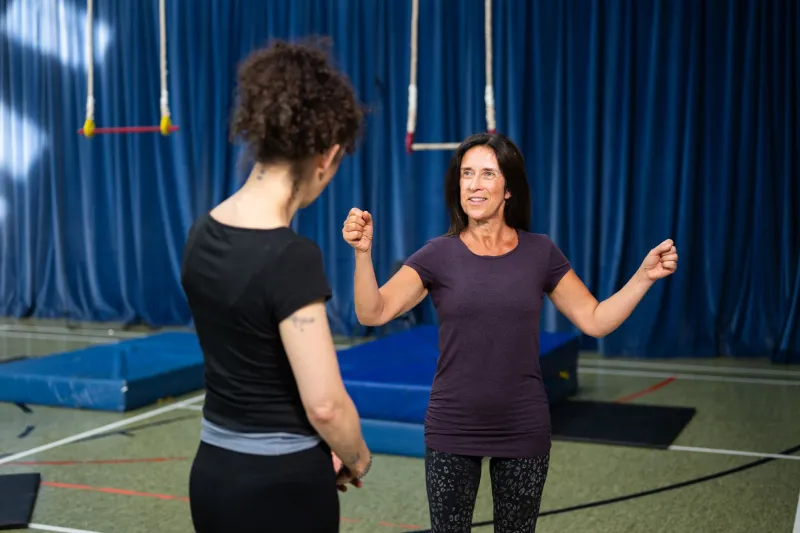
At Affinity Gymnastics, the busiest five minutes of the week are usually the ones around the double doors. Children are hunting for socks, coaches are trying to hand back water bottles, and at least one parent is hovering with a question that has been brewing since Tuesday. That question matters. It just needs the right setting.
Talking to your child's coach is not a confrontation and it is not a parent-teacher meeting in the car park. It is a normal part of club life. The trick is knowing which conversations belong at the door, which deserve a diary slot, and how to raise a concern without making a coach feel ambushed beside the kit bins.
The car park is not a conference room
Coaches want to hear from parents. A good club runs on feedback, not guesswork. But the end of a session is a handover moment, not a review meeting. The coach is still responsible for a group of children, often moving on to the next class, and may be the only person who knows where the missing shin pad has gone.
So before you launch into a detailed analysis of your child's back handspring, ask yourself one question: can this be sorted in under thirty seconds, or does it need a proper conversation? That single test saves a lot of awkward hovering.
The 30-second rule: when a doorstep question works
Some things are genuinely quick. They are factual, time-sensitive and not confidential. Good examples include:
- 'Is Mia meant to bring grips next week?'
- 'You mentioned a club display — is that the Saturday or the Sunday?'
- 'Harry has a poorly knee today. Is there anything he should avoid in the warm-up?'
- 'We are away next week — shall I email reception or just let you know?'
These are fine at pick-up because they have a clear answer and do not require the coach to recall a child's whole term of progress while a queue forms behind you. Keep it light, keep it short, and if the answer opens a bigger topic, ask how best to follow it up.
When to book a proper chat
The longer conversations deserve a proper slot. That includes concerns about progress, confidence, behaviour, kit that keeps going missing, a child who has gone very quiet in class, or a recurring issue that has already been mentioned once. It also includes anything you would not want another parent overhearing.
Most clubs, including ours, can arrange a short phone call or a ten-minute chat before or after a session. Email reception or the coach directly if you have their club address, and ask for a convenient time. 'Could I book five or ten minutes with you in the next couple of weeks?' is a perfectly reasonable request. It tells the coach you respect their time, which tends to make the conversation warmer before it has even started.
How to write an email that gets read (and answered)
Coaches are not ignoring your email. They are often teaching, planning, travelling between venues or answering three other messages about a competition entry. A clear email helps everyone.
Use a specific subject line: 'Amelia — confidence in Tuesday class' is better than 'Quick question'. Give the context in two or three sentences. Say what you have noticed, ask one main question, and suggest a way forward. Avoid sending a long WhatsApp voice note at 9pm unless the club has explicitly said that is how they prefer to communicate.
Here is a simple structure:
Subject: Sam — Saturday class, quick question about progress
Hi Coach Priya,
I hope you are well. Sam has been coming to Saturday classes since September and really enjoys them, but he has been a bit quiet about what he is working on lately. Could you let me know how he is getting on and whether there is anything we should be doing at home? Happy to book a quick call if that is easier.
Thanks, Rachel
That email is easy to answer. It is not a complaint, it is not a demand for a written report, and it gives the coach a clear way to respond.
Scripts for the tricky bits
It can help to have a few phrases ready, especially if you are worried about coming across as too full-on or too vague.
For progress: 'I am not looking for a full assessment, but could we book a few minutes to talk about how things are going? I want to support what you are doing in class rather than guess from the viewing area.'
For confidence: 'Poppy loves the class but has gone very quiet on the way home. Have you noticed anything different in the session, or is it just a phase we should ride out?'
For kit: 'We seem to be losing a lot of hair bobbles and one sock per month. Is there a club Lost Property routine, or should I just accept this as a gymnast's tax?'
For a missed session or illness: 'Just to let you know, Leo will miss Thursday. Nothing serious — he will be back next week. Is there anything he should catch up on?'
What not to do at the double doors
Try not to corner a coach while they are counting children or packing away equipment. Avoid comparing your child to another gymnast in front of them, or in front of the children. Avoid giving a detailed critique of the session based on the five minutes you saw through the viewing window. And avoid turning a quick question into a rolling discussion while other parents wait.
If your concern is about welfare or safety, do not leave it as a car-park chat. Ask reception for the club welfare officer or head coach and follow the club's safeguarding policy. That is not a quick question; it is a process, and it should be treated as one.
Keeping your child in the loop
Children often know more than we think. If you are going to ask a coach about their progress, tell them you are doing it. 'I am going to ask Priya how you are getting on — is there anything you want me to mention?' gives them a voice and avoids the feeling that they are being discussed behind their back. It also helps the coach, because your child may have a completely different view of what is going well.
A realistic picture of progress
Gymnastics progress is not a straight line. A child can spend weeks on a skill, then suddenly click with it after a holiday, a growth spurt or a change of group. Coaches see the small wins — a better landing, a calmer routine, a child who finally puts their hand up — that parents may miss from the viewing gallery. A booked conversation is a chance to hear those wins, not just a list of things to fix.
Equally, coaches are not mind-readers. If your child is worried about a competition, struggling with a new group or feeling left out at the water break, say so. The earlier a coach knows, the easier it is to adjust the session or keep an eye on things.
The bottom line
Ask, don't assume. Ask at the right time, in the right way, and with a clear idea of what you need. A thirty-second question at the door is fine. A proper conversation is better for anything bigger. And an email that is short, specific and polite will almost always get a better response than a car-park monologue delivered while the coach is holding a bucket of chalk.
Your child's coach is part of their team. Treat the conversation like teamwork, not a tribunal, and everyone — especially the gymnast — will benefit.