Confirmed Place, Weeks to Spare: A Sensible Countdown to Your Child's First Gymnastics Session
There's a particular kind of anticlimax that comes with booking a child into gymnastics. You spend weeks chasing a place, you get the email, you pay the deposit — and then you discover the first session isn't until the middle of next month. For a five-year-old, that's roughly a decade.
Waiting lists are simply part of how most UK clubs run. Classes are capped, coach-to-gymnast ratios are tight, and many clubs only take new beginners at the start of a term or half-term. None of that is a sign you've picked the wrong club. It's a sign you've picked a popular one.
So what do you do with the gap? Not much, honestly — and that's the reassuring part.
Why the wait is usually longer than you'd think
Gymnastics is one of the few sports where a coach genuinely cannot eyeball twenty children at once and keep everyone safe. Beginner classes tend to be capped well below what a sports hall could physically hold, and new intake often happens in blocks so that a coach can take a group through the basics together rather than drip-feeding one child at a time.
September and January are the busiest points in the year, and a place offered in October for a January start is completely normal. If you haven't already, ask the club to confirm the start date, the term dates and what the fees cover in writing. It's also worth asking whether they hold a place deposit or a waiting-list position, and whether anything is expected of you before the first session. Nine times out of ten, the answer is nothing at all.
The skills that actually help (and they aren't acrobatic)
Ask a gymnastics coach what makes a new starter settle quickly and you won't hear 'natural flexibility' or 'good strength'. You'll hear things like: can they listen to an instruction, can they wait for a turn, are they comfortable barefoot, do they cope with a busy hall.
Those are all things you can gently nurture at home with zero risk of injury.
- Balancing. Standing on one leg while brushing teeth, or hopping along a garden path, quietly builds the ankle and core control that underpins everything else.
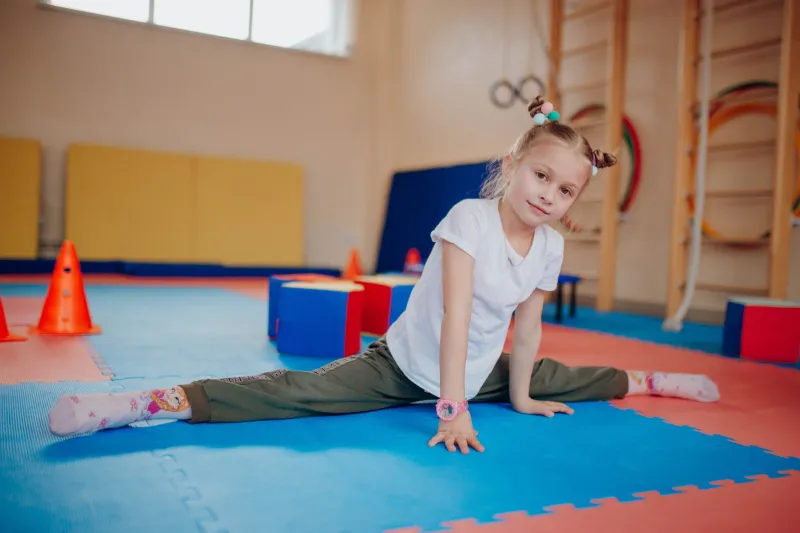
- Sitting positions. Children who can sit in a straddle or a pike on the floor for a minute or two without drama find the first few weeks much easier. Let them do it in front of the telly. Don't push, don't correct, just let it be a comfortable place to be.
- Floor play on carpet. Log rolls, teddy-bear walks, crawling games — all excellent, all free, all safe on a cleared floor with the coffee table shifted back.
- Turn-taking. Snakes and ladders, waiting for a sibling's go on the swing, queuing for the loo. A gymnastics class is largely a very well-organised queue, and children who've had practice cope better.
- Bare feet. Socks off at home, time on grass in the summer, tolerating different textures underfoot.
- Independence. Can they take off their own socks, put their shoes back on, and carry a small bag? These tiny skills matter enormously on a busy Saturday morning.
What to leave well alone until a coach is watching
This is the part worth being firm about. Some of the most common gymnastics moves are also the ones most likely to cause problems when practised unsupervised at home — usually in the back, wrists or neck, and usually gradually rather than dramatically.
- Bridges and backbends on the floor. A staple of gym classes and a frequent source of low-level back complaints in young children who practise them repeatedly on hard floors. Leave them for the coach.
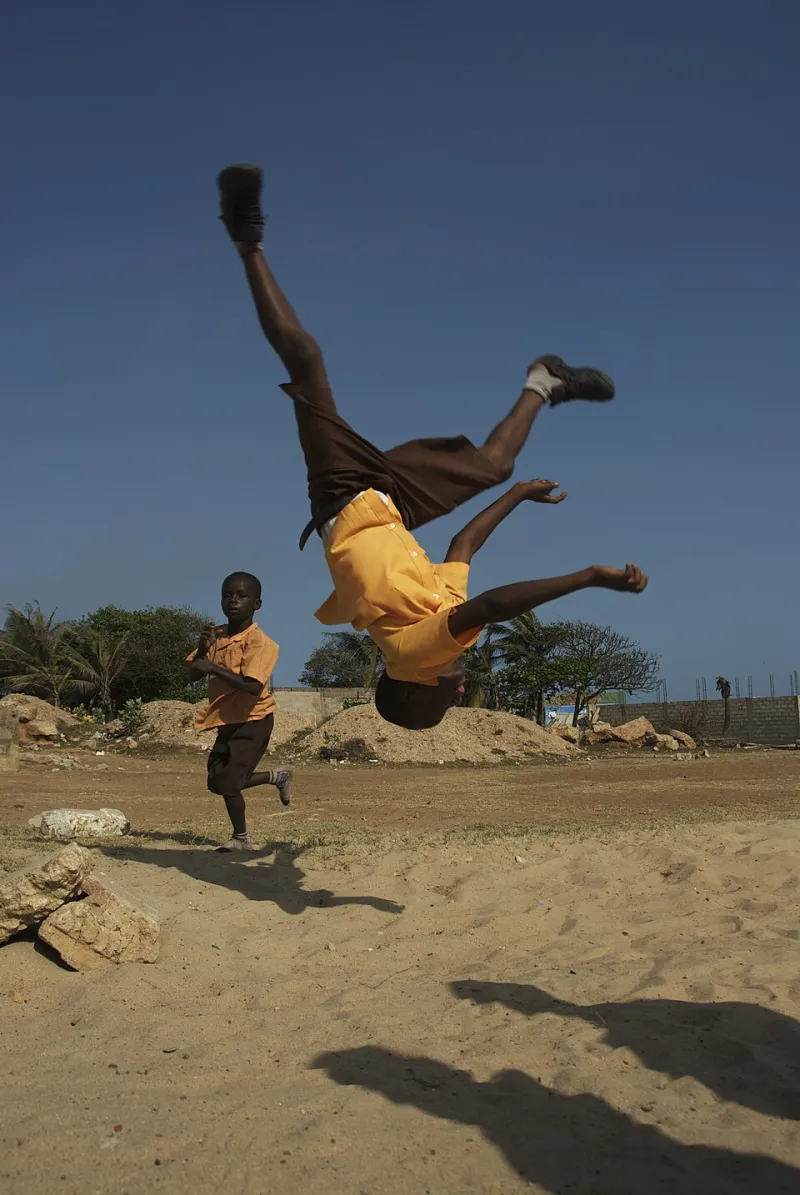
- Anything from standing — walkovers, handsprings, back handsprings, flips. These need a mat, a spot, and a trained eye.
- Run-ups of any kind. There's a reason gym floors are sprung and covered in mats. Your hallway is neither.
- Beds, sofas and garden trampolines. Tempting, bouncy and entirely the wrong surface for landing on your neck.
- Door frames and pull-up bars. Hanging and swinging feels fun right up until a shoulder says otherwise.
- Forced stretches. Splits and deep stretches held to the point of pain do more harm than good, particularly for children who are naturally very flexible and don't feel the warning signs.
A simple rule of thumb: if it would need a spotter or a mat at the club, it stays at the club. Nothing your child does in the next six weeks at home will make or break their gymnastics career. A sore back might.
Keeping the enthusiasm alive without overhyping it
There's a balance between a child who's counting down the days and a child who's built the first session up so much that reality can't compete. Aim for somewhere in the middle.
Let them choose a water bottle or a small bag. Put a paper chain on the kitchen wall and take a link off each week — children love a visual countdown and it saves you answering the same question every morning. Watch some gymnastics together if it happens to be on, but don't turn it into a curriculum.
Do resist promising skills. 'You'll be doing flips by Christmas' is a lovely thing to say and a difficult thing to walk back in February.
It's also worth holding off on buying much kit. Most clubs ask beginners to start in shorts and a t-shirt, and many have a second-hand rail or a kit swap group for leotards once you know what's actually required. Check the club's kit list before spending anything.
The admin worth sorting before week one
- Confirm the start date, arrival time and where to go on the first day.
- Check the kit requirements, hair rules and whether jewellery needs to come off.
- Tell the coach about anything relevant in advance — medical conditions, injuries, sensory needs, or a child who finds new rooms overwhelming. Clubs are used to these conversations and would far rather have them early.
- Ask about the viewing area, drop-off arrangements and parking. Some clubs have a seated gallery, some ask parents to wait in a foyer, and some run a strict drop-and-go.
- Ask whether there's a settling-in arrangement if your child is nervous.
The first session itself
Arrive ten minutes early rather than twenty. Label the water bottle. Tie the hair back at home if you can. Keep the goodbye short and cheerful — a long, anxious farewell at the door is much harder for a child to recover from than a brisk one.
And if the first session ends in tears, a refusal to go back, or complete indifference? That's common too, and it rarely means anything. Give it three or four weeks before you draw conclusions.
The waiting is the easy bit. Use the time for confidence, not cartwheels, and the first class will take care of itself.